Meet Russ from EkoBuild
Russ introduces his experience in flooring, underfloor heating and renewable energy.
Watch Russell explain ribbon heating, flooring choices and installation planning. Each video includes a written transcript and English captions.
Russ introduces his experience in flooring, underfloor heating and renewable energy.
Russ explains why floor coverage, insulation, controls and installation matter when planning underfloor heating.
Russ introduces dry ribbon underfloor heating beneath compatible carpet and explains the combined carpet and underlay tog limit.
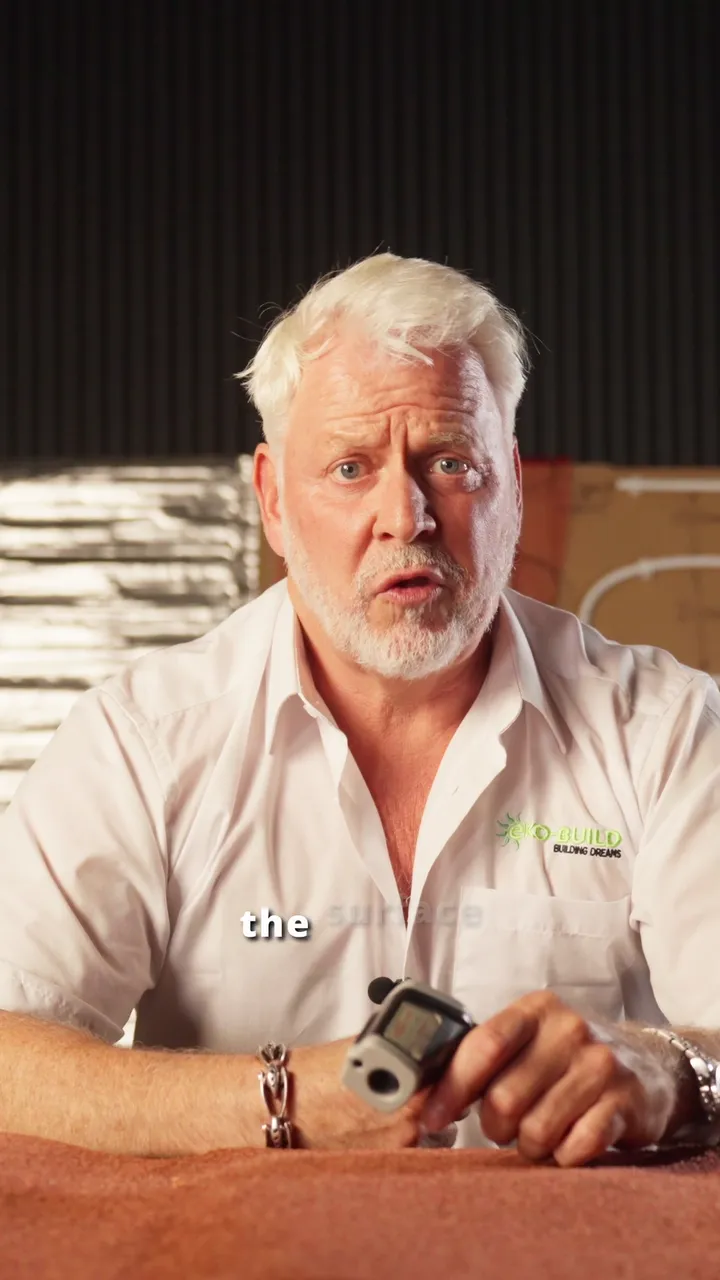
Russ demonstrates surface-temperature readings through carpet and explains why this example is not a promise for every property.
Russ introduces ribbon heating beneath compatible LVT, laminate and engineered wood, with the floor build-up chosen for the finish.
Russ explains why the floor covering should be discussed early when planning underfloor heating.
Russ explains how solar generation and battery storage can supply electricity for underfloor heating at different times of day.
Russ gives his view on choosing between water, cable, carbon film and ribbon systems for different projects.
Practical questions answered on their own pages with the working shown. Where we concede ground to a competing technology, that is deliberate: a comparison you cannot check is not worth reading.
Ribbon can provide primary heating when the usable output from the fitted mats meets the room’s calculated heat loss at the permitted floor temperature. Around 70–80% useful coverage is a planning aim, not a pass/fail test. Confirm the complete heating design before removing existing heating.
Yes. The Ribbon is 1.8mm and lays dry beneath compatible carpet with no screed, no self-levelling compound and no overboard. The rule that decides it is tog: a combined carpet and underlay tog of 2.8, no higher. Ask for the manufacturer’s tested TOG rating; appearance or thickness alone does not establish thermal resistance.
Yes to all three, but they are not the same job. Laminate and engineered wood float straight over the Ribbon. LVT and sheet vinyl are different products from each other, and that difference decides the build-up.
For an illustrative 10m² room with 7m² of fitted 150W/m² mats, the load is 1.05kW. At an example tariff of 28p/kWh, one full-power hour costs 29.4p. Actual cost depends on the fitted load, your tariff and how long the heating draws power. The full guide shows how to calculate your own scenarios.
It depends on the job. For a new build designed around a heat pump, water underfloor heating deserves serious consideration. For a small tiled bathroom a cable system may be all you need. Ribbon is what we build around for a retrofit that has to give primary heat under several floor types with no screed.
Russell White founded EkoBuild in 2001. Thirty years in contract flooring, twenty five specialising in underfloor heating, twenty working with renewable energy.
He has installed and assessed water, cable and ribbon underfloor heating, as well as solar panels, heat pumps, biomass boilers and wind turbines, and he has been involved in developing products rather than only fitting what was already available.
Twenty years ago he built his own eco home using waste pallet blocks, solar, wind, heat recovery, biomass and electric underfloor heating. Living with and maintaining that taught him that making something work is only half the job. It also has to be practical to install, control, service and repair.
EkoBuild supplies AHT amorphous metal ribbon for compatible floor constructions.
Map your actual room in the free Room Designer and it works out the layout, the fitted area and coverage, and the price.