How electric underfloor heating works
Electric underfloor heating supplies heat across the fitted floor area. Heat distribution and room comfort depend on the whole-mat layout, excluded areas, floor construction, controls and the room’s heat loss.
AHT Ribbon is a 1.8mm electric heating mat with a nominal output of 150W/m² of fitted mat. Choose whole stocked mats that fit the available floor, and check the complete floor construction, controls and room heat loss.
Ribbon vs cable vs water underfloor heating
There are three common types. Here is the honest version, including where each one wins.
| Type | Best for | Watch out for |
|---|---|---|
| Ribbon (EkoBuild) | Whole-room primary heat, floating floors, renovations, under carpet | Final connection needs an electrician |
| Electric cable / foil mat | Small rooms, taking the chill off tiled bathrooms | Floor warming or primary heat, depending on the specific product and room design |
| Water (wet) underfloor heating | New builds with a deep floor build-up, whole-house off a heat pump | Compare the specified screeded or dry-panel construction, total height and installation work |
Water, cable, foil and ribbon systems each have different installation requirements. For a renovation, compare the complete floor build-up, fitted output, controls and installation cost for the same room.
Can electric underfloor heating be your primary heat?
Primary heating means the installation supplies the room’s heating requirement. Ribbon, cable, foil and water-based products must each be assessed against room heat loss, fitted output and floor limits; product type alone does not establish suitability.
The ribbon can be designed as the sole heat source where its installed output meets the room’s calculated heat loss. Coverage is a useful planning measure, but it does not establish suitability by itself. If you want the full detail, read our dedicated guide on electric underfloor heating as a primary heat source.
Does underfloor heating need screed?
The Ribbon can be used without a traditional deep screed. The prepared subfloor still needs the insulation or rigid support, underlay, overlay or adhesive specified for the selected finish. The mat is 1.8mm thick; calculate the complete finished floor height from all layers.
Both water and electric systems have low-profile constructions. Compare the complete floor layers, heating design and installation requirements; the ribbon mat thickness alone does not give the finished floor height. There is more detail in our guide to underfloor heating with no screed.
Which floors can it go under?
The ribbon can be used with approved floor finishes:
- Compatible carpet and underlay, subject to the TOG limits and room heat-loss design
- Laminate and engineered wood
- Vinyl and LVT
- Stone and tile
Floor temperature and heat distribution depend on the fitted layout, floor construction and controls. Check compatible flooring and commission the controls to the flooring manufacturer’s limits.
Running costs and pairing with solar
Running cost depends on room heat loss, fitted output, floor construction, controls and tariff. Select insulation suited to the assembly: Therm-All is for suitable floating floors; tile and stone require an appropriate rigid insulating or backer base.
Running cost depends on the fitted mat area, electricity tariff and actual thermostat on-time. At 150W/m², each square metre uses 0.15kWh for a full-power hour. Multiply that by your unit rate and measured or assumed on-time; an assumed duty cycle is a scenario, not a predicted bill.
How it's fitted
Plan the exact floor construction, whole-mat layout, controls and electrical supply before installation. Do not cut the mats. Arrange a qualified electrician for electrical design, protection, testing, connection and commissioning, and follow the supplied fitting instructions and flooring manufacturer’s requirements.
What does electric underfloor heating cost?
EkoBuild prices are listed by Ribbon length, with free UK delivery on orders of £150 or more:
- 0.5m Ribbon roll from £50.00 for the 1.2m length, up to £184.00 for the 7m
- 1m Ribbon roll from £65 for open floors
- touch screen thermostat £76.50
- Therm-All insulation £53.50 per 10m² pack
Check the warranty for the product being purchased and read EkoBuild’s published purchase terms. AHT’s certificate gives separate cover and conditions for its mats and AHT-branded controls and accessories. Use the Room Designer to get an exact price for your room.
Ready to work out your room?
Map your floor in the free Room Designer and get the whole-mat layout and stock estimate, or browse the shop and order with free UK delivery on orders of £150 or more.
Electric underfloor heating FAQs
Can electric underfloor heating be a primary heat source?
Yes, when the installed output meets the room's calculated heat loss and the flooring is suitable. Around 70–80% coverage is a planning aim, not proof that the system can be the only heat source. The Room Designer estimates a whole-mat layout and stock price; confirm the heating design before removing other heating.
Does electric underfloor heating need screed?
Choose a flooring product approved for underfloor heating and follow its temperature, thermal-resistance and installation limits. The Ribbon is 1.8mm thick, but insulation, underlay, rigid preparation and the floor finish add to the complete build-up.
Which floors can you put it under?
Choose a flooring product approved for underfloor heating and follow its temperature, thermal-resistance and installation limits. The Ribbon is 1.8mm thick, but insulation, underlay, rigid preparation and the floor finish add to the complete build-up.
How much does it cost?
The 0.5m Ribbon starts from £50 for the shortest 0.5m-wide mat (1.2m long). UK delivery is free on orders of £150 or more.
Is it expensive to run?
Running cost depends on the fitted mat area, electricity tariff and actual thermostat on-time. At 150W/m², each square metre uses 0.15kWh for a full-power hour. Multiply that by your unit rate and measured or assumed on-time; an assumed duty cycle is a scenario, not a predicted bill.
Ready to fit it? Follow the step-by-step installation guides for carpet, tile, wood and vinyl floors.
See the heating and flooring samples
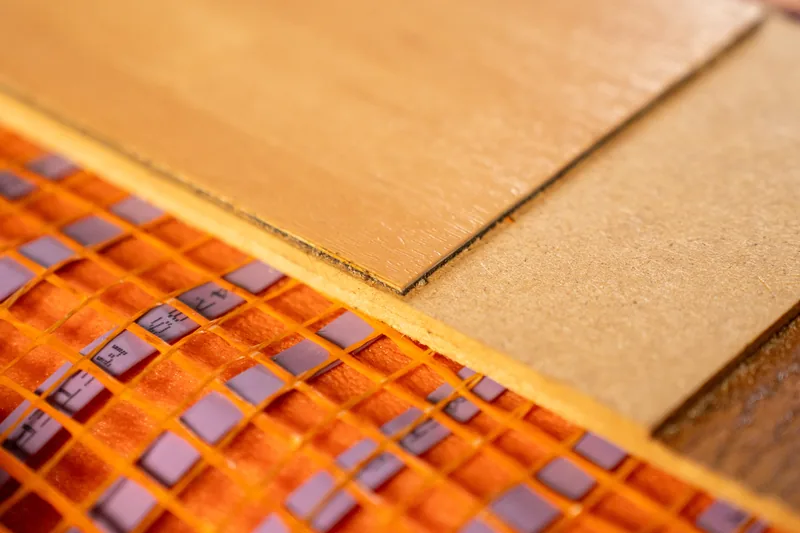
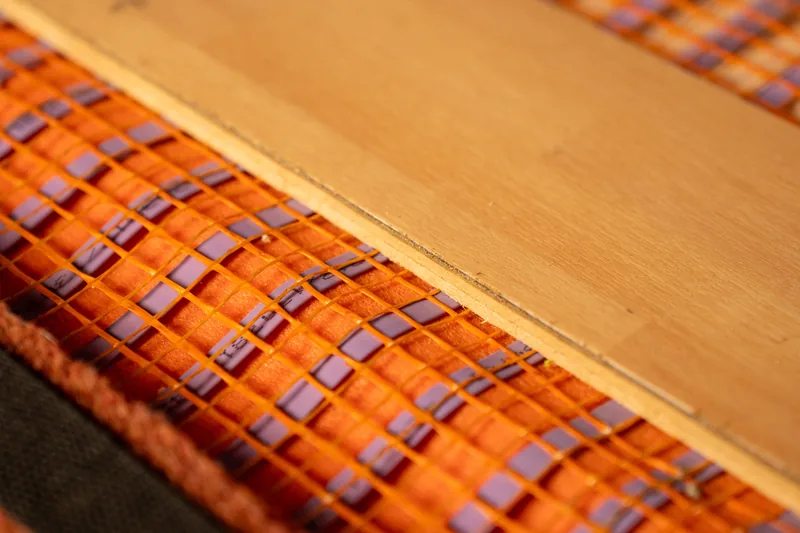
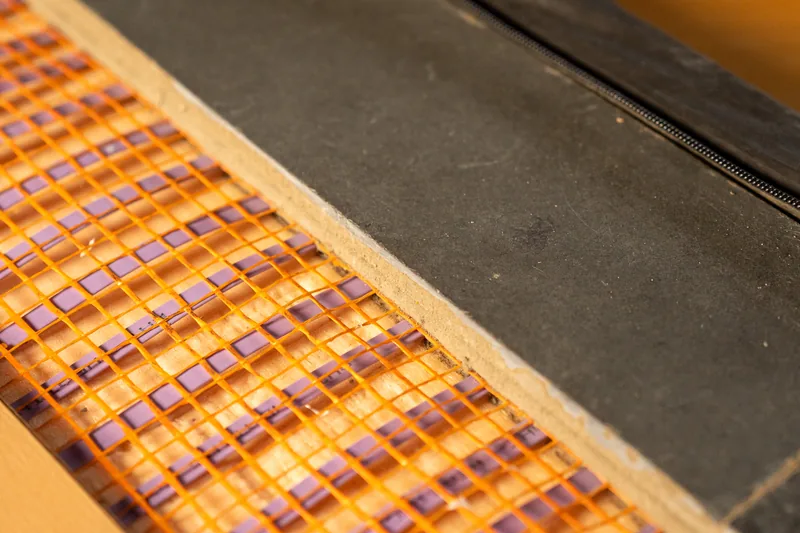
A closer look at the demonstration samples. Confirm the complete floor build-up, controls and installation requirements for your chosen products.